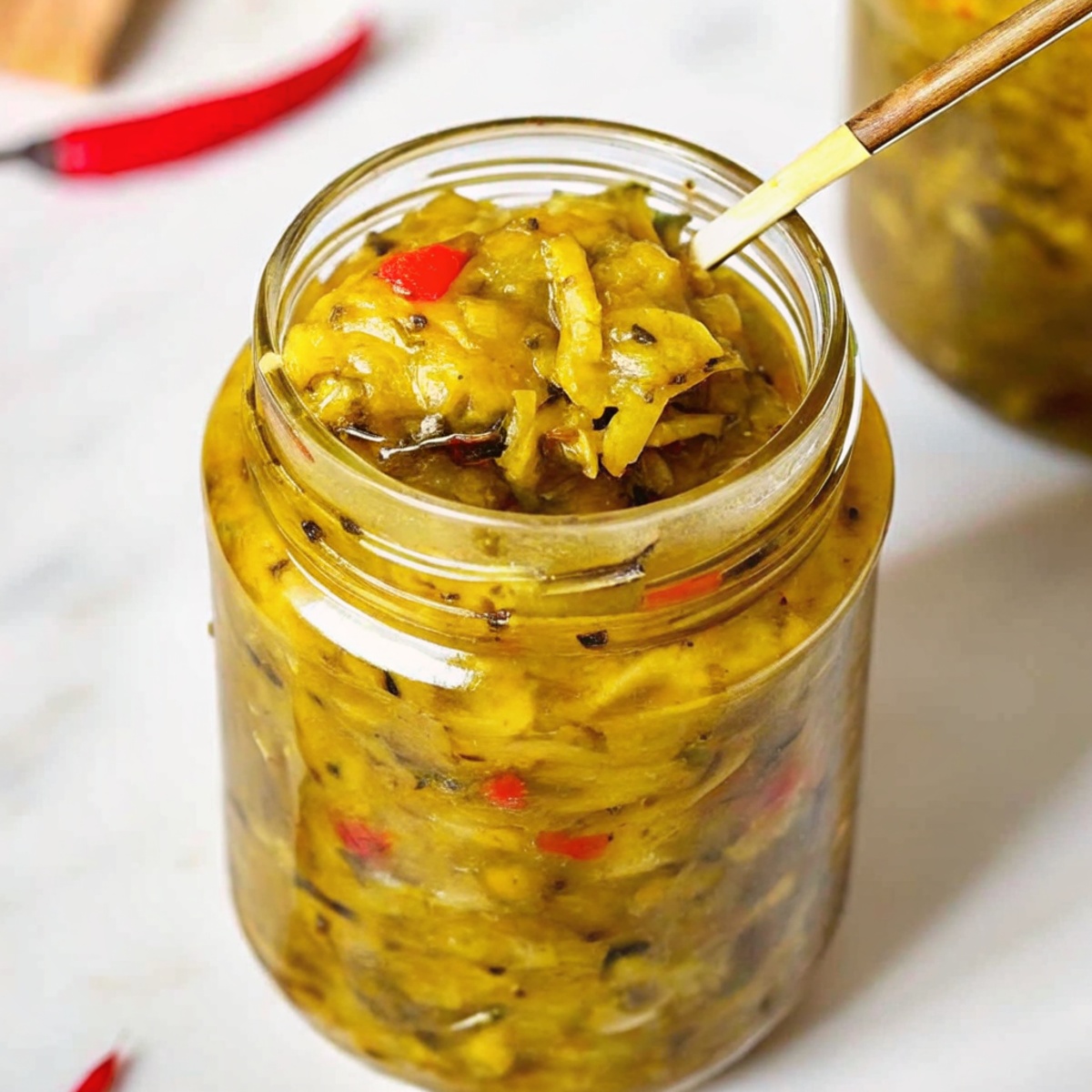
Sweet zucchini relish is one of those recipes that looks simple on paper but can go wrong fast if you skip a few key steps. The real technique here isn’t fancy equipment or special ingredients — it’s how you handle the zucchini and the salt. If you’ve ever ended up with watery relish that slides off a burger or tastes flat, it usually comes down to how well the vegetables were salted, drained, and balanced with sugar and vinegar.
When I first learned this recipe, I realized the overnight salt soak was non‑negotiable. It’s not just seasoning; it’s a controlled way to pull excess water out of the zucchini and onions so they stay crisp in the jar instead of turning soft and diluted. The follow-up rinse and squeeze are just as important. Done right, you end up with vegetables that soak up flavor instead of watering it down.
The other technique that matters here is managing the sweet and tangy base. Six cups of sugar and a good amount of white vinegar might look intense, but in the jar it gives you the classic American-style hot dog relish profile: bright, sweet, and punchy. The spices — nutmeg, turmeric, celery seed, black pepper — are subtle, so you need that simmering step to wake them up and cook off any harshness from the vinegar.
If you’re new to canning, this recipe is a useful place to practice safe water-bath processing without getting overwhelmed. You’ll learn how the relish should look and feel at each stage, how full to pack jars, and what a proper seal looks like. Once you understand these steps, you can repeat them confidently whenever your garden or market hands you a surplus of zucchini.
All About Sweet Zucchini Relish
Servings: 112 servings | Prep Time: 50 minutes | Total Time: about 12 hours (including overnight resting and canning)
Essential Ingredients
- 12 cups shredded unpeeled zucchini
- 4 cups chopped onion
- 5 tablespoons canning salt
- 6 cups white sugar
- 2 1/2 cups white vinegar
- 1 red bell pepper, chopped
- 1 green bell pepper, chopped
- 1 tablespoon cornstarch
- 1 1/2 teaspoons celery seed
- 3/4 teaspoon ground nutmeg
- 3/4 teaspoon ground turmeric
- 1/2 teaspoon ground black pepper
Simplicity in Action
- Prep the vegetables. Shred the unpeeled zucchini (a box grater or food processor works well) and measure 12 firmly packed cups. Chop the onions finely so they blend evenly into the relish.
- Salt and rest overnight. In a large non-metallic bowl, combine the shredded zucchini and chopped onion. Sprinkle the canning salt evenly over the top, then use clean hands to toss and massage until the salt is well distributed. Cover the bowl and refrigerate for at least 8 hours or overnight. This resting time is crucial for drawing out excess moisture.
- Rinse and squeeze. The next day, transfer the zucchini-onion mixture to a colander. Rinse thoroughly under cool running water to remove excess salt. Using your hands, press and squeeze the mixture firmly to remove as much liquid as you can. The vegetables should feel damp but not dripping. Set aside.
- Build the pickling base. In a large, non-reactive pot, combine the white sugar, white vinegar, chopped red bell pepper, chopped green bell pepper, and cornstarch. Add the celery seed, ground nutmeg, ground turmeric, and ground black pepper. Stir well until the cornstarch is fully dispersed and no dry pockets remain.
- Cook the relish. Add the drained zucchini and onion to the pot and stir to combine. Place the pot over medium-high heat and bring the mixture to a steady boil, stirring occasionally to prevent sticking. Once boiling, reduce the heat to medium-low and simmer gently for about 30 minutes. The mixture should thicken slightly and the vegetables should look glossy and well-coated.
- Sterilize your jars. While the relish simmers, wash seven 1-pint canning jars, lids, and bands in hot soapy water and rinse well. Place the jars in a large pot of simmering water (or use a dedicated canner) to sterilize for at least 10 minutes. Keep the jars hot until you’re ready to fill them. Prepare lids according to the manufacturer’s instructions.
- Fill the jars. Working with one hot jar at a time, pack the hot relish into the jars using a ladle and funnel, leaving about 1/2 inch of headspace at the top. Use a clean utensil (like a chopstick or plastic spatula) to release any trapped air bubbles by gently stirring down the sides. Add more relish if needed to maintain 1/2 inch headspace. Wipe jar rims clean, place lids on top, and screw on the bands until fingertip tight.
- Set up the water bath. Place a rack in the bottom of a large stockpot or canner and fill it about halfway with hot water. Bring the water to a simmer. Carefully lower the filled jars onto the rack, keeping them upright. Make sure there is at least 2 inches of water covering the tops of the jars; add more hot water if needed.
- Process the jars. Bring the water to a full, rolling boil. Once boiling, cover the pot and process the jars for 30 minutes, maintaining a steady boil the entire time. Start timing only after the water returns to a full boil.
- Cool and check the seals. After 30 minutes, turn off the heat and carefully lift the jars from the water using a jar lifter. Place them on a towel-lined or wooden surface, leaving space between jars. Let them cool undisturbed for 12 to 24 hours. Once cool, press the center of each lid; a properly sealed lid will not flex up or down. Any unsealed jars should be refrigerated and used first.
How sweet is this really? Adjusting sugar and vinegar so it fits your taste
This sweet zucchini relish is firmly in the classic American sweet-pickle zone. Six cups of sugar may look like a lot, but remember you’re flavoring 12 cups of zucchini plus onions and peppers, and you’re using small spoonfuls at a time. If you prefer a less sweet relish, you can reduce the sugar slightly, but you need to keep the overall balance safe for canning.
A good rule of thumb is to keep the total volume of vinegar and sugar together high enough that the pH stays acidic. You can usually trim the sugar by about 10–20% (for example, down to 5 or 4 3/4 cups) without affecting safety, although the flavor will be tangier and the texture a bit looser. Avoid large reductions, because sugar also helps with texture and shelf life.
If you want a sharper bite, don’t cut the vinegar. Instead, you can slightly increase vinegar (up to about 3 cups total) and reduce the sugar by the same volume to keep the liquid level consistent. Always keep white vinegar at 5% acidity, and don’t dilute it with water. When in doubt, make the recipe as written first, then adjust the next batch based on what you liked or didn’t like.
Using up a zucchini mountain: how to measure, shred, and drain it right
Zucchini size can vary wildly, and that directly affects this relish. The key is to measure the zucchini after shredding, not before. Use a box grater or the shredding disc on a food processor to create even shreds. Lightly pack them into a measuring cup so they’re snug but not crushed. This gives you a reliable 12-cup measure regardless of how big your original zucchini were.
You can leave the skin on, even for larger zucchini, as long as the skin is not tough or damaged. If you’re using very overgrown garden zucchini, scoop out any large seeds before shredding. After salting and resting overnight, the draining step makes or breaks the texture. Really squeeze out the water — grab handfuls and press firmly, or press the mixture against the sides of the colander with a spoon.
The goal is to remove enough liquid that the relish base doesn’t get diluted, while still keeping the vegetables plump. If your zucchini is very watery and you don’t squeeze enough, the relish may end up thinner and less flavorful. If you’ve removed plenty of moisture, the mixture in the pot will thicken nicely and coat the shreds instead of swimming in liquid.
Canning safety for this relish: when you can tweak the recipe (and when you really shouldn’t)
Because this sweet zucchini relish is preserved with a water-bath canning method, the acidity level is important for safety. The vinegar and sugar, combined with the natural acidity of onions and peppers, are calibrated to keep the relish shelf-stable. You have some flexibility, but it’s not unlimited. Understanding what you can change safely will help you adapt the recipe without risking spoilage.
You can safely adjust dry spices like celery seed, nutmeg, turmeric, and black pepper to taste. You can also swap red or green bell pepper for another sweet pepper of similar type and quantity. What you shouldn’t do is reduce the total amount of vinegar below the stated 2 1/2 cups or add low-acid ingredients (like extra garlic or other vegetables) without a tested recipe.
Stick with 5% acidity white vinegar and avoid using homemade vinegar or different strengths, because that changes the pH. Don’t thicken the relish with extra cornstarch, flour, or other thickeners; they can affect heat penetration during processing. If you want a thicker relish, focus on draining the zucchini very well rather than changing the canning formula. When in doubt, follow the recipe as written for any batch you plan to store at room temperature.
Your Questions Answered
Can I halve or double this sweet zucchini relish recipe without causing problems?
You can safely halve this recipe as long as you keep all ingredient ratios the same and follow the same processing time. Halving is useful if you’re short on zucchini or storage space. Doubling is a bit trickier, because very large batches can heat unevenly and may not thicken properly. If you need more, it’s better to make two separate batches rather than one massive pot. Always maintain the full 30-minute processing time and ensure the mixture returns to a full boil before you start timing.
What’s the best way to tell if my relish has gone bad after canning?
Before opening, check for obvious issues: bulging lids, leaking, or rusted bands can signal trouble. When you open a jar, listen for the seal breaking — a little pop is normal. Discard the jar if you see mold, unusual cloudiness, or if the relish spurts out. Smell it carefully; any off, sour, or fermented odor that doesn’t match the original sweet-tangy profile is a warning sign. If the lid ever comes unsealed in storage, don’t taste it; throw it out. When in doubt, prioritize safety over saving a questionable jar.
Can I skip the water-bath canning and just refrigerate this relish?
Yes, you can skip the canning step if you prefer, as long as you treat the relish as a refrigerated product. After simmering, let it cool slightly, then transfer it to clean, heatproof containers, leaving a little headspace. Once fully cooled, cover and refrigerate. It will keep for several weeks in the fridge. For this no-canning version, you have slightly more flexibility with sugar levels, but you should still maintain the full amount of vinegar for flavor and preservation. Always use clean utensils when scooping from the jar to extend its life.
Sweet Zucchini Relish
Equipment
- Large non-metallic bowl
- Colander
- Large pot
- Seven 1-pint canning jars and lids
- Canning pot with rack
Ingredients
- 12 cups zucchini shredded, unpeeled
- 4 cups onion chopped
- 5 tablespoons canning salt
- 6 cups white sugar
- 2.5 cups white vinegar
- 1 red bell pepper chopped
- 1 green bell pepper chopped
- 1 tablespoon cornstarch
- 1.5 teaspoons celery seed
- 0.75 teaspoon ground nutmeg
- 0.75 teaspoon ground turmeric
- 0.5 teaspoon ground black pepper
Instructions
- Assemble all ingredients and tools so everything is within reach before beginning.
- Combine the shredded zucchini and chopped onion in a large non-metal bowl. Sprinkle the canning salt over the mixture and work it in thoroughly with your hands, then cover and refrigerate overnight to draw out moisture.
- The next day, transfer the zucchini and onion to a colander and rinse well under cool running water. Press or squeeze the mixture to remove as much liquid as you can, then set the drained zucchini aside.
- In a large pot, combine the sugar, vinegar, chopped red and green bell peppers, and cornstarch. Stir in the celery seed, nutmeg, turmeric, and black pepper until evenly distributed and the cornstarch is dissolved.
- Add the drained zucchini to the pot and bring the mixture to a boil over medium-high heat. Reduce the heat to medium-low and simmer, stirring occasionally, for about 30 minutes or until the relish has thickened and the peppers are tender.
- While the relish simmers, sterilize seven 1-pint jars and their lids by boiling them or using a hot dishwasher cycle; keep the jars hot until you are ready to fill to prevent breakage.
- Spoon the hot relish into the sterilized jars, pressing down to remove any air pockets and filling each jar to the top. Wipe the rims clean and secure the lids snugly.
- Place a rack in the bottom of a large stockpot and bring water to a boil. Using a jar lifter, carefully lower the filled jars onto the rack, leaving about 2 inches of space between them and ensuring the jars are covered by at least 2 inches of water. Bring the water back to a full boil, cover, and process the jars for 30 minutes.
- Remove the jars from the pot and set them several inches apart on a cloth-covered or wooden surface to cool. Once cool, press the center of each lid to verify a proper seal—the lid should not move up and down.