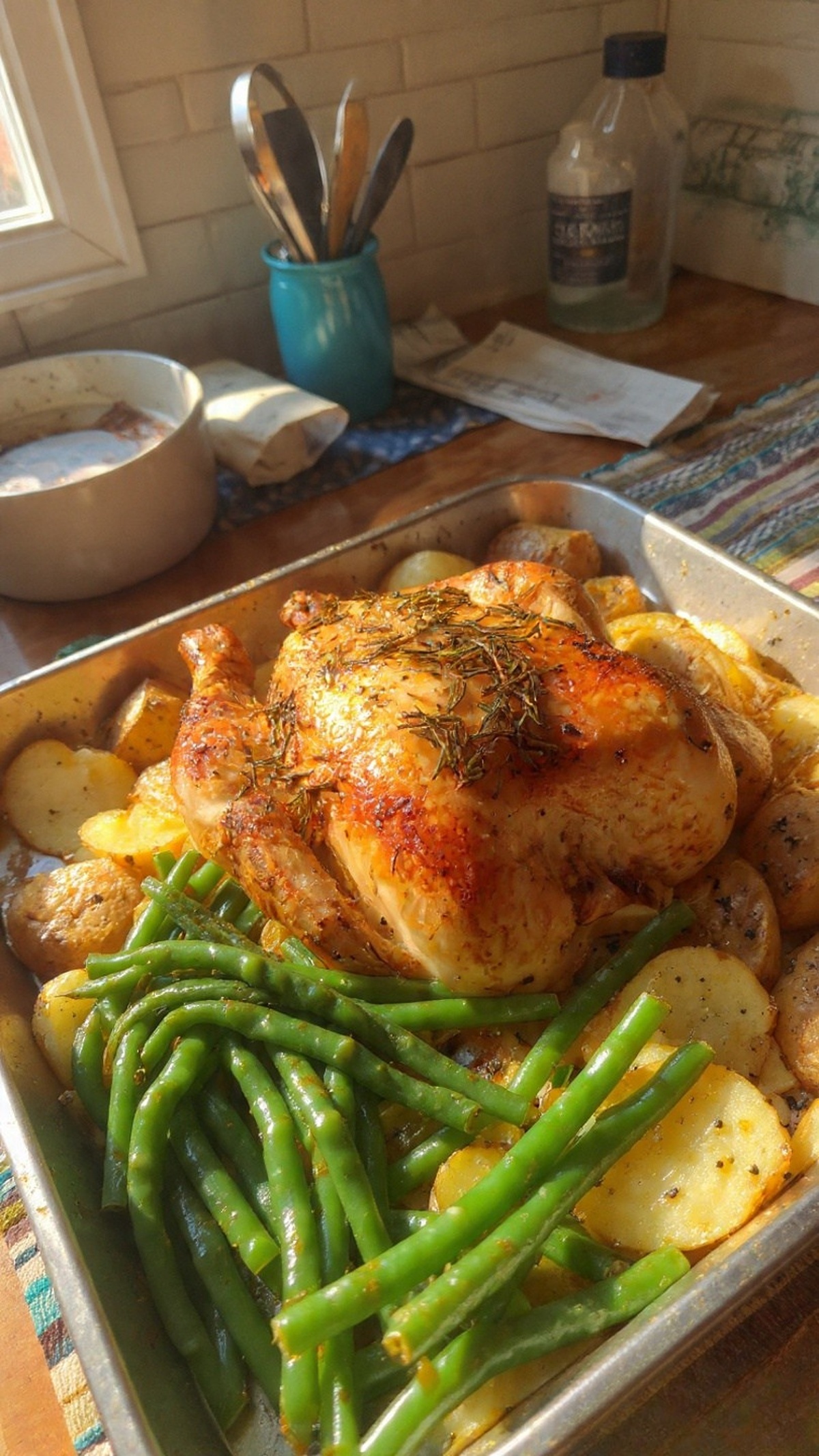
If you ever stare at a whole chicken and a drawer of vegetables and wonder what to do with them on a weeknight, this Herb Roast Chicken and Vegetables is the answer. It turns basic, seasonal produce into a full dinner in one pan, without much hands-on time. Once everything’s in the oven, you’re basically done.
I started leaning on this recipe when I wanted something that felt like a proper meal but didn’t want to juggle multiple pots on the stove. The chicken roasts on a rack, the vegetables cook underneath, and the lemon and herbs do most of the flavor work for you. It’s also flexible with whatever’s in season; new potatoes, carrots, and green beans are a solid base, but you can swap in what’s fresh and local.
This works especially well when you’ve picked up a whole chicken from a nearby farm or market and don’t want it to sit in the fridge. A simple herb oil, a lemon, and some sturdy vegetables are all you need. The oven time is longer, but the active prep is quick, and you get six portions out of it, so it’s ideal for family dinners or planned leftovers.
If you’re trying to cook more sustainably, this recipe helps you use the whole bird and a mix of seasonal vegetables in one go. The instructions are straightforward, there’s very little to babysit, and the result looks like you put in more effort than you actually did. Let’s walk through how to get it in the oven efficiently and on the table without fuss.
A Favorite to Share: Making Herb Roast Chicken and Vegetables
Gathering Your Ingredients
- 1/4 cup olive or vegetable oil
- 2 tablespoons chopped fresh thyme leaves or 1 teaspoon dried thyme leaves
- 2 tablespoons chopped fresh marjoram leaves or 1 teaspoon dried marjoram leaves
- 1/2 teaspoon salt
- 1/4 teaspoon coarsely ground black pepper
- 1 lemon
- 1 whole roasting chicken (about 4 pounds)
- 6 new potatoes, cut in half
- 1 cup baby-cut carrots
- 1/2 pound green beans, trimmed
Steps to Savor
- Preheat your oven to 375°F (190°C). In a small bowl, stir together the oil, thyme, marjoram, salt, and pepper. Finely grate about 1 teaspoon of zest from the lemon and add it to the oil mixture. Cut the zested lemon into 4 wedges and place them inside the cavity of the chicken.
- Fold the chicken wings back so the tips touch behind the neck area; this helps them cook evenly and not burn. Tie the drumsticks together or secure them to the tail with kitchen string or skewers so the bird holds its shape. Set a rack in a shallow roasting pan and place the chicken breast-side up on the rack. Brush the chicken generously with the herb oil mixture. Insert a meat thermometer into the thickest part of the inner thigh, making sure the tip is in the meat and not touching bone.
- Roast the chicken uncovered for 45 minutes. While it starts cooking, halve the potatoes (if you haven’t already) and gather the carrots and green beans so they’re ready. After 45 minutes, carefully remove the pan from the oven and arrange the potatoes, carrots, and green beans in a single layer around the chicken. Brush the chicken and vegetables with more of the herb oil mixture, using all that remains.
- Return the pan to the oven and roast, still uncovered, for another 30 to 45 minutes. The chicken is done when the thermometer reads 180°F (82°C) and the juices run clear, not pink, when you cut into the thickest part of the thigh. The vegetables should be tender and lightly browned at the edges. If the chicken browns too quickly before it’s done, loosely tent the top with foil.
- Transfer the pan to a heat-safe surface and let the chicken rest for about 15 minutes before carving. This helps keep the meat juicy and gives the vegetables time to settle in the hot pan juices. Remove and discard the lemon from the cavity.
- Lift the chicken onto a serving platter and arrange the roasted potatoes, carrots, and green beans around it. Spoon some of the pan drippings over the chicken and vegetables for extra flavor, and serve the rest at the table so everyone can add more if they like.
Fresh vs Dried Herbs
Both fresh and dried herbs work well here, but they behave a little differently. Fresh thyme and marjoram give a brighter, greener flavor and pair nicely with seasonal vegetables and a good-quality local chicken. Dried herbs are more concentrated, so you need less. A good rule is roughly 1 teaspoon dried for every tablespoon fresh. When using dried herbs, make sure they’re not old and dusty; they should still smell fragrant when you open the jar. Because this recipe bakes for a while, dried herbs have time to soften and release their flavor, so you won’t lose anything by using them. If you have a mix, you can even use dried in the oil and finish the cooked chicken with a sprinkle of fresh leaves for a clean, herbal aroma at the table.
Choosing the Right Pan
The pan you use affects how evenly the chicken and vegetables cook, and how much browning you get. A shallow metal roasting pan with a rack is ideal: it allows hot air to circulate around the chicken and gives the vegetables direct contact with the pan, which helps them caramelize. Avoid very deep pans, which can trap steam and lead to softer, paler skin. If you don’t have a rack, you can place the chicken directly on a bed of sliced onions or thick-cut potatoes; just know that the underside will be a bit softer. For the most sustainable option, choose a durable pan you’ll use often rather than single-use disposables. Whatever pan you choose, leave some space between the vegetables so they roast instead of steam; crowding the pan too much can make them soggy.
Roasting the Vegetables Evenly
For evenly roasted vegetables, size matters more than the exact mix you use. Aim to cut the potatoes so they’re roughly the same thickness as the carrots; this helps everything become tender at about the same time. New potatoes hold their shape well and are great for roasting, but you can use any firm, seasonal potato as long as you cut it into similar-sized pieces. Spread the vegetables in a single layer around the chicken, not piled high, so they can brown instead of steaming. Halfway through the second roasting stage, you can quickly turn the potatoes and toss the carrots and green beans with the pan juices for more even color. If your oven has hot spots, rotating the pan front to back once during cooking helps prevent one side from over-browning while the other side lags behind.
Easy Flavor Twists
This recipe is simple enough to handle small changes without extra fuss. For a citrus-forward version, add a few thin lemon slices under the chicken skin before roasting, or squeeze a fresh lemon over everything just before serving. To lean into garlic, toss a handful of unpeeled whole garlic cloves with the vegetables; they’ll roast into soft, mild bites you can squeeze out and spread on the potatoes. If you have sturdier seasonal herbs like rosemary or sage, add a small sprig or two to the cavity with the lemon, but don’t overpack it or you’ll block airflow. For a slightly deeper color, you can brush the chicken with a mix of oil and a spoonful of Dijon mustard in the last 20 minutes; wait until the end so it doesn’t burn. These small adjustments keep the base recipe the same but let you adapt it to what you have on hand.
Common Questions Answered
How can I tell if the chicken is done without a meat thermometer?
A meat thermometer is the most reliable method, but you can still check doneness without one. First, pierce the thickest part of the thigh with a knife or skewer; the juices should run clear, not pink or cloudy. The leg should also move easily when you wiggle it. Another sign: when you insert the tip of a knife into the thigh joint, you shouldn’t see any raw or translucent flesh. Keep in mind that ovens vary, so if in doubt, give it an extra 5–10 minutes and rest the bird before carving.
Can I prep the chicken and vegetables ahead of time?
Yes, you can make this recipe more weeknight-friendly with a bit of advance prep. You can mix the herb oil and store it in a covered container in the fridge for up to 2 days. The chicken can be seasoned and stuffed with lemon up to 24 hours ahead; keep it uncovered in the fridge to help the skin dry slightly, which promotes crisping. Potatoes and carrots can be cut a few hours in advance and stored in cold water, then drained and patted dry before roasting. Wait to trim the green beans until closer to cooking so they stay crisp and bright.
What should I do with leftovers to avoid waste?
This recipe is a good way to cook once and eat more than once if you plan for leftovers. After dinner, remove the remaining meat from the bones while the chicken is still slightly warm; it comes off more easily. Store the meat and vegetables in separate airtight containers in the fridge. The chicken works well in salads, grain bowls, or quick sandwiches the next day. You can also simmer the bones with vegetable scraps and water for a simple stock; keep it at a gentle simmer, not a rolling boil, for clearer broth. This approach stretches one roast chicken into several meals and cuts down on food waste.
Herb Roast Chicken And Vegetables
Equipment
- Roasting pan with rack
- Meat thermometer
- Small bowl
- Basting brush
Ingredients
- 1/4 cup olive or vegetable oil
- 2 tablespoons chopped fresh thyme leaves or 1 teaspoon dried thyme
- 2 tablespoons chopped fresh marjoram leaves or 1 teaspoon dried marjoram
- 1/2 teaspoon salt
- 1/4 teaspoon coarsely ground pepper
- 1 lemon
- 1 whole roasting chicken about 4 pounds
- 6 new potatoes cut in half
- 1 cup baby-cut carrots
- 1/2 pound green beans
Instructions
- Preheat the oven to 375°F (190°C) and gather the ingredients.
- In a small bowl, whisk together the oil, thyme, marjoram, salt, and pepper. Zest the lemon to yield about 1 teaspoon of peel and stir it into the herb oil. Cut the lemon into quarters and set aside.
- Tuck the chicken wings behind the bird to secure them, and fasten the drumsticks together with kitchen twine or a skewer. Place the chicken breast-side up on a rack set in a shallow roasting pan.
- Brush the herb oil all over the chicken. Put the lemon quarters into the chicken cavity. Insert a meat thermometer into the thickest part of the inner thigh, avoiding bone.
- Roast the chicken, uncovered, for 45 minutes.
- After 45 minutes, arrange the halved potatoes, carrots and green beans around the chicken in the pan. Brush the vegetables and the chicken with any remaining herb oil.
- Return the pan to the oven and continue roasting, uncovered, for an additional 30 to 45 minutes, or until the thermometer registers 180°F (82°C) and the thigh juices run clear when pierced.
- Remove the chicken from the oven and let it rest for about 15 minutes before carving. Discard the lemon pieces from the cavity.
- Carve the chicken, transfer to a platter, arrange the roasted vegetables around it, and serve with the pan drippings.