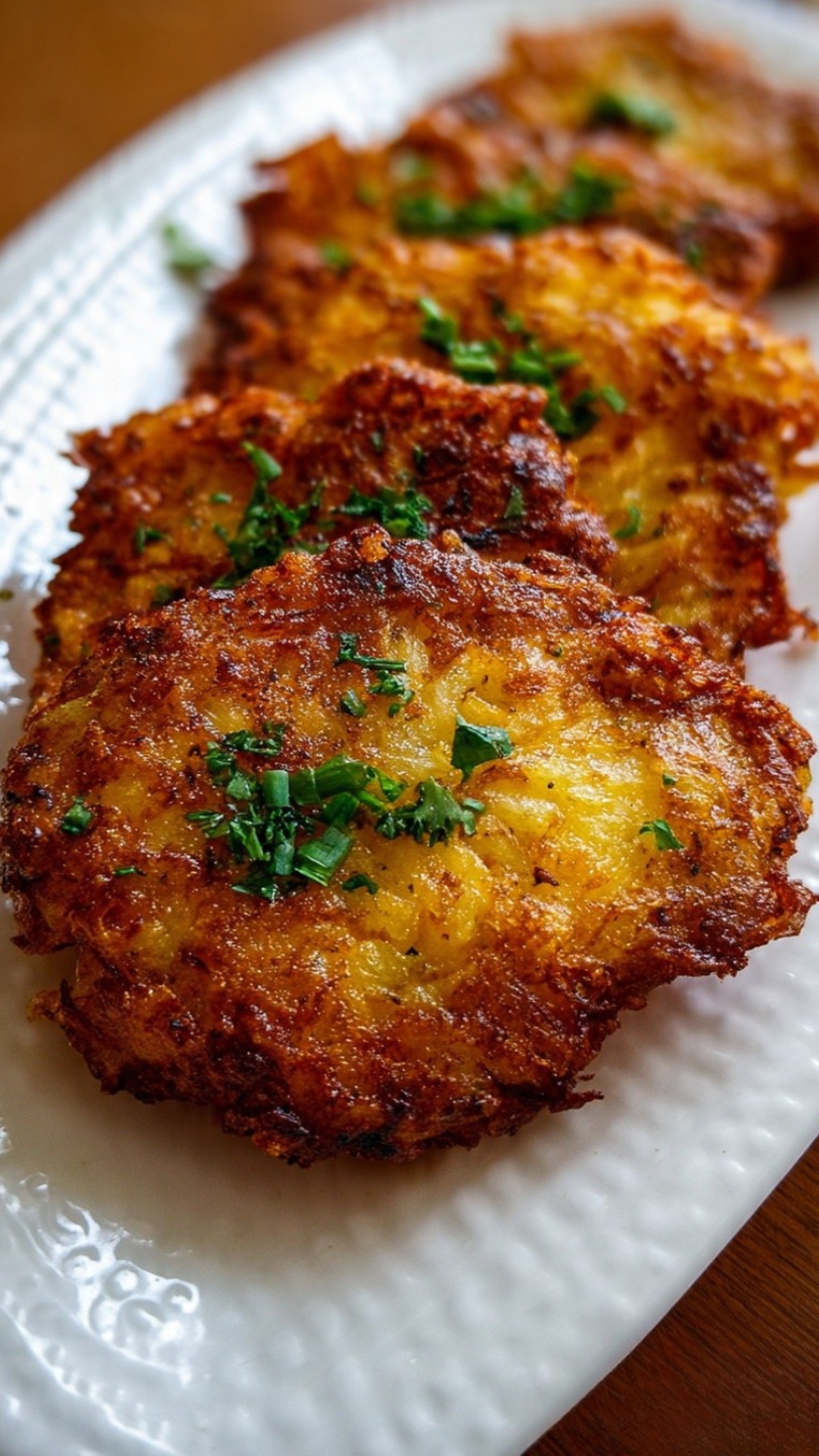
When the weather cools down and potatoes are cheap and plentiful at the market, I always end up making these grated potato fritters. They’re crisp on the outside, soft in the middle, and they feel like an easy way to turn a basic potato into something that really fills the gap at the end of the day. I like that they don’t need anything fancy, just a few fresh herbs and pantry staples.
What I love about this recipe is how flexible it is. It works for a simple dinner with a salad, a lazy weekend brunch with eggs, or even as little bites under smoked fish or roasted veggies. If I’ve got a basket of local potatoes and a bunch of thyme or rosemary on the counter, I know I can get a tray of fritters going without much planning. And if you’re cooking for a mix of people, you can keep them mild and let everyone customize with hot sauce, sour cream, or avocado on top.
These grated potato fritters also make good use of what’s in season. Sebago or other floury potatoes store well, so they’re ideal for cooler months when fresh produce can feel limited. This recipe turns that humble, sturdy potato into something that smells amazing as it cooks and hits the table hot and ready to share. If you’re after a reliable, comforting plate that doesn’t take all night, this one earns a regular spot in the rotation.
Cozy Up with Homemade Grated Potato Fritters
What You’ll Need
- 5 medium (about 1kg) sebago potatoes, peeled
- 1 medium (150g) onion, finely chopped
- 1/2 cup (75g) self-raising flour
- 2 eggs, lightly beaten
- 2 teaspoons fresh thyme or rosemary, finely chopped
- 1 cup (250ml) extra virgin olive oil, or as needed, for shallow frying
- Flaky salt and freshly ground black pepper, to taste
- Avocado wedges, hot sauce, and sour cream, optional, to serve
How to Make It Happen
- Grate the peeled potatoes on the coarse side of a box grater straight into a bowl of cold water. This slows any browning and rinses off some starch so the fritters cook more evenly.
- Tip the potatoes into a strainer and rinse under cold water until the water runs clear. Drain well. Transfer the grated potato to a clean tea towel, wrap it up, and squeeze firmly over the sink to remove as much liquid as possible. The potato should feel loose and fairly dry, not clumpy or wet.
- Place the dried grated potato in a large mixing bowl. Add the chopped onion, self-raising flour, and beaten eggs. Stir until everything is evenly coated and no dry flour remains. Fold in the thyme or rosemary, then season generously with salt and pepper. The mixture should hold together when pressed, but not feel soupy.
- Pour enough olive oil into a large, heavy-based frying pan to reach about 1.5cm up the sides. Heat over medium-high until a small bit of mixture sizzles steadily when added. Using a 1/3 cup measure, carefully drop portions of the mixture into the hot oil, flattening them slightly with the back of a spoon. Leave space between fritters so they crisp rather than steam.
- Shallow-fry the fritters in batches for about 5 minutes on the first side, or until deep golden and crisp at the edges. Flip carefully and cook the second side for another 5 minutes or so. Don’t rush this step—they need that full time per side to cook through and set in the middle.
- Transfer cooked fritters to a wire rack set over a tray so they stay crisp (better than paper towel, which can trap steam). Sprinkle with a little extra salt and pepper while hot. Serve right away with avocado wedges, hot sauce, and sour cream, or keep them warm in a low oven while you finish the batch.
Getting Potatoes Really Dry
Dry potatoes are the difference between crisp fritters and soggy ones, so it’s worth an extra minute here. After rinsing the grated potatoes, squeeze them as hard as you can in a clean tea towel or nut milk bag. If you see liquid pooling in the bowl once you’ve mixed everything, you can add a spoonful more flour and gently toss. For big batches, work in two or three smaller towel bundles instead of one huge one; it’s easier to squeeze and you remove more moisture. You’ll know you’ve done it right when the shreds separate easily and don’t clump into wet handfuls.
Choosing Thyme or Rosemary
Both thyme and rosemary work well with potatoes, but they give different results. Thyme is softer and more subtle, great if you want the onion and potato flavours to stand out. Rosemary is stronger and more piney, so a little goes a long way—chop it very finely so you don’t get tough needles in a bite. If you’re using very fresh, fragrant rosemary from the garden, start with a bit less than the recipe calls for and adjust after you’ve cooked the first fritter. You can also mix the two: thyme in the batter, a tiny sprinkle of rosemary on top right after frying.
Mini Fritters for Canapés
For bite-sized canapés, keep the same mixture but change the size and cooking approach. Use about 1 tablespoon of mixture per fritter and flatten them gently so they’re thin and even. They’ll cook faster, so start checking after 2–3 minutes per side. Lower the heat slightly to avoid burning before the centres cook through. Once drained on a rack, top them with a small dollop of sour cream, a slice of avocado, smoked fish, or roasted seasonal vegetables. They hold well at room temperature for a short time, making them practical for parties or grazing boards.
Frequent Asked Questions:
Can I make the grated potato fritters ahead of time?
You’ll get the best texture if you cook and eat these fritters soon after frying, but you can plan ahead a little. One option is to grate, rinse, and dry the potatoes, then store them in an airtight container in the fridge for up to 4 hours with a layer of paper towel to absorb moisture. When you’re ready, mix in the remaining ingredients and fry. If you need to fully cook in advance, reheat the fritters on a wire rack over a tray in a 190°C (375°F) oven for about 10–12 minutes until hot and crisp again, rather than microwaving.
What if I don’t have self-raising flour?
If you only have plain (all-purpose) flour, you can still get great fritters with a simple adjustment. Use the same 1/2 cup quantity and add about 1 teaspoon of baking powder and a small pinch of salt. This mimics self-raising flour and gives a light lift. If you skip the raising agent entirely, the fritters will still work, but they’ll be a bit denser and less fluffy in the middle. Make sure to whisk the baking powder into the flour first so it’s evenly distributed before mixing it with the potato.
How do I stop the fritters from falling apart in the pan?
Fritters usually fall apart for three reasons: the mixture is too wet, the pan isn’t hot enough, or you flip them too early. Start by making sure the potatoes are very well squeezed and that you’ve added the full amount of egg and flour so the batter can bind. When frying, wait until the edges look golden and set before flipping—if the surface still looks pale and loose, give it another minute. Also, avoid moving the fritters around too much; let them form a crust before you touch them.
Can I bake these instead of frying to use less oil?
Yes, you can bake them, but the texture will be slightly different—more like a rosti patty than a classic fritter. Line a baking tray with baking paper and brush it generously with olive oil. Spoon small mounds of mixture on the tray, flattening them well so they cook through. Brush the tops lightly with more oil. Bake at about 210°C (410°F), flipping once, until the edges are crisp and browned. Don’t skimp on the oil on the tray; that’s what helps create the crisp base in the oven.
Which potatoes work best if I can’t find sebago?
Sebago is a floury potato, so you’ll get similar results with other starchy or all-purpose varieties. Look for potatoes labelled as good for roasting or baking rather than waxy salad types. Russet, Yukon Gold, or Maris Piper are all good options depending on your region. Waxy potatoes tend to hold more moisture and stay firmer, which can make the fritters less crisp. If you only have waxy potatoes, spend extra time squeezing out moisture and be sure to cook them long enough so the centres soften nicely.
Grated Potato Fritters

Ingredients
Fritters:
- 5 medium (1kg) sebago potatoes peeled
- 1 medium (150g) onion finely chopped
- 1/2 cup (75g) self-raising flour
- 2 eggs lightly beaten
- 2 teaspoons fresh thyme or rosemary
- 1 cup (250ml) extra virgin olive oil for shallow frying, or as needed
To Serve:
- avocado wedges optional
- hot sauce optional
- sour cream optional
Instructions
- Using the coarse side of a box grater, grate the potatoes and transfer them straight into a large bowl of cold water to prevent discoloration.
- Lift the grated potato from the water and drain in a sieve; rinse under cold running water until it runs clear. Spread the drained potato onto a clean tea towel and wring out as much moisture as you can so the mixture becomes loose and relatively dry.
- Combine the dried grated potato, finely chopped onion, self-raising flour and beaten eggs in a large bowl. Add the thyme or rosemary and season generously with salt flakes and freshly ground black pepper, mixing until evenly incorporated.
- Pour enough olive oil into a heavy-based frying pan to reach about 1.5 cm depth and heat over medium-high until hot but not smoking. Drop heaped 1/3-cup portions of the potato mixture into the pan, leaving space between each fritter.
- Shallow-fry the fritters in batches for about 5 minutes per side, or until a deep golden crust forms on each side and the centers are cooked through. Transfer to a wire rack to drain and season immediately with salt and pepper.
- Serve hot with avocado wedges, a dash of hot sauce and/or sour cream, or make smaller rounds to use as canapé bases.