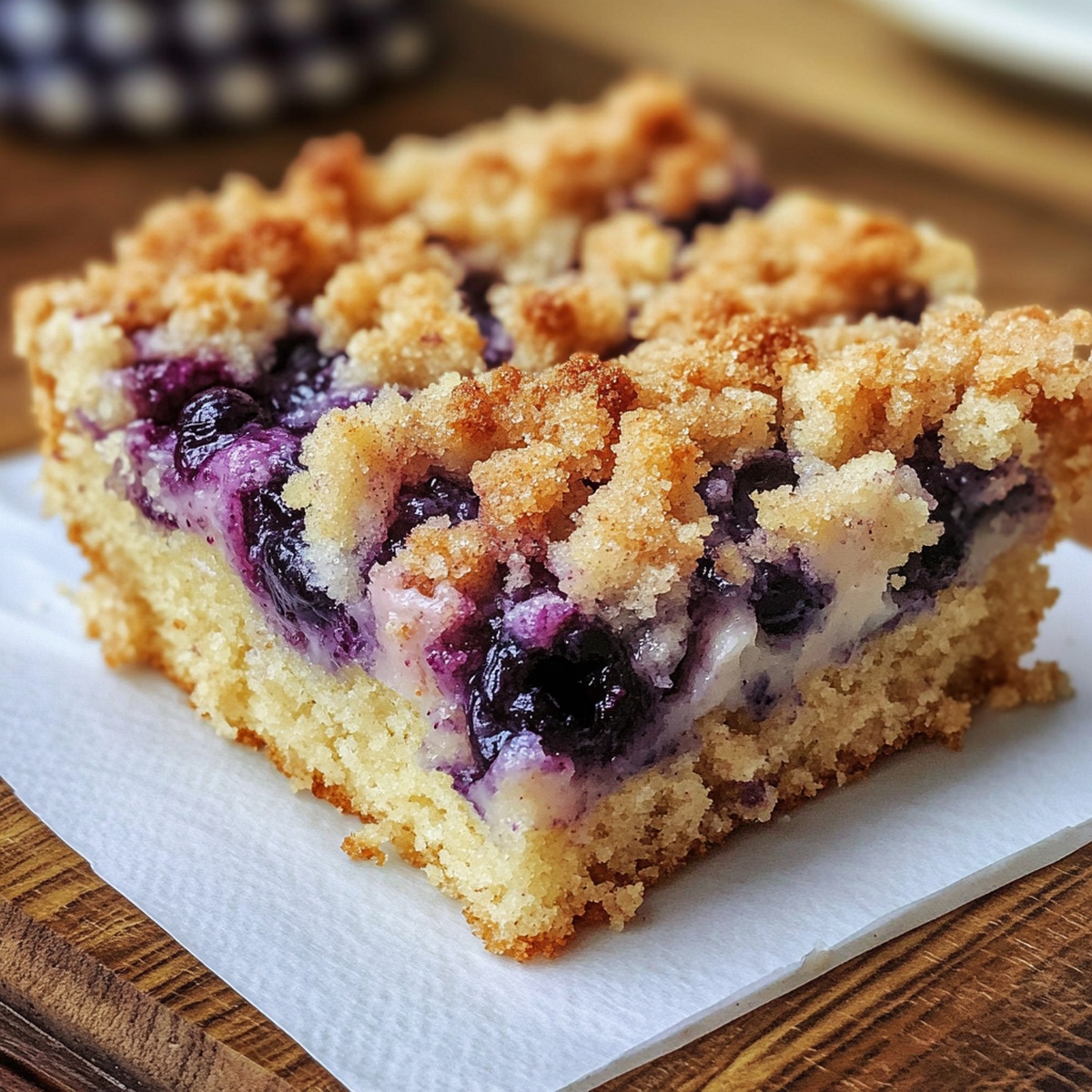
I started making this blueberry crumb cake because I got tired of choosing between “too sweet” bakery versions and dry homemade ones. I wanted something that worked for a weekend breakfast, an afternoon coffee break, or a simple dessert after dinner, without a pile of leftovers going stale on the counter. An 8×8 pan is just enough to share, but not so large that you’re stuck with it all week.
The version I’m sharing here grew out of a late-summer problem: too many fresh blueberries and not enough ways to use them before they collapsed in the fridge. I tried a few classic coffee cake recipes, but most were either heavy on spice or used a thick layer of cake with a tiny scattering of fruit. I wanted the opposite: a tender base with berries showing up in every bite and a crumb layer that actually stayed crunchy the next day.
This blueberry crumb cake relies on self-rising flour, which keeps the ingredient list short and makes the texture very consistent. If you like to bake seasonally, it’s ideal during peak blueberry season when local berries are firm, sweet, and not watery. The cake isn’t overly sweet, so it works well for breakfast or brunch, especially if you’re serving a mix of dishes and don’t want anything too rich to dominate the table.
Over time, I’ve adjusted small details that make a noticeable difference: coating the blueberries in flour so they don’t sink, keeping the crumb topping cold so it bakes crisp, and using a simple glaze that adds just enough sweetness without turning the surface sticky. If you cook with what’s around you—farmers’ market berries, local butter, and milk—this cake fits easily into that routine. It’s straightforward, practical, and once you understand the technique, you can repeat it with other seasonal fruit too.
Blueberry Crumb Cake, Made Easy
Simple Comfort Ingredients
- 1/2 cup butter, room temperature
- 3/4 cup granulated sugar
- 1 large egg, room temperature
- 1 teaspoon vanilla extract
- 2 cups self-rising flour, divided
- 1/2 cup milk (whole milk recommended)
- 1 1/2 cups fresh blueberries
- 1/2 cup light brown sugar
- 2 tablespoons granulated sugar
- 1/2 cup all-purpose flour
- 1/4 teaspoon salt
- 4 tablespoons cold butter, cubed
- 1/2 cup powdered sugar
- 3 teaspoons milk
- 1/2 teaspoon vanilla extract
Instructions
- Prep the pan and oven. Preheat your oven to 350°F (175°C). Lightly grease an 8×8-inch baking pan or line it with parchment for easier removal. This keeps the cake from sticking and helps it bake evenly.
- Prep the blueberries. Rinse the blueberries gently under cool water and drain well. Measure out the 2 cups of self-rising flour, then remove 2 tablespoons from that amount and toss it with the blueberries until they’re lightly coated. This flour coating helps keep the berries suspended in the batter instead of sinking.
- Cream the butter and sugar. In a mixing bowl, beat the room-temperature butter and 3/4 cup granulated sugar together until light and fluffy. This should take about 2–3 minutes with an electric mixer. Proper creaming adds air, which helps the cake rise and stay tender.
- Add egg and vanilla. Beat in the egg and 1 teaspoon vanilla until fully combined. Scrape down the sides of the bowl so there are no streaks of unmixed butter. The mixture should look smooth and slightly thick at this stage.
- Alternate flour and milk. With the mixer on low, add the remaining self-rising flour in 2–3 additions, alternating with the 1/2 cup milk. Start and end with the flour. Mix just until the batter is smooth. Stop as soon as the flour is incorporated to avoid overmixing, which can make the cake dense.
- Fold in the blueberries. Gently fold the flour-coated blueberries into the batter using a spatula. Turn the batter over itself rather than stirring vigorously so the berries don’t burst and stain the batter blue.
- Spread in the pan. Transfer the batter to the prepared 8×8 pan. Spread it into an even layer, pushing gently into the corners. The batter will be fairly thick; smooth the top so the crumb layer can sit evenly.
- Make the crumb topping. In a medium bowl, combine the 1/2 cup all-purpose flour, 1/2 cup light brown sugar, 2 tablespoons granulated sugar, and 1/4 teaspoon salt. Add the 4 tablespoons cold, cubed butter. Use a pastry cutter, two forks, or your fingertips to cut the butter into the dry ingredients until the mixture forms small clumps and pea-sized bits. It should look like chunky, damp sand with visible pieces of butter.
- Add the crumb layer. Sprinkle the crumb mixture evenly over the batter, covering it from edge to edge. Try not to press it down; leaving it loose helps it bake into a crisp, crunchy topping.
- Bake the cake. Place the pan in the preheated oven and bake for 55–60 minutes. The cake is done when the top is golden, the crumbs are set, and a toothpick inserted into the center (avoiding berries) comes out clean or with just a few moist crumbs. If the top browns too quickly, tent loosely with foil for the last 10–15 minutes.
- Cool completely. Set the pan on a wire rack and let the cake cool completely in the pan. This helps the crumb layer firm up and makes slicing cleaner.
- Make the glaze. In a small bowl, whisk together 1/2 cup powdered sugar, 3 teaspoons milk, and 1/2 teaspoon vanilla until smooth. Adjust with a few drops more milk if needed; it should be thick but pourable, like heavy cream.
- Glaze and serve. Once the cake is fully cooled, drizzle the glaze over the top in thin lines or a crosshatch pattern. Let the glaze set for a few minutes, then slice into 9 squares. Store leftovers in a covered container at room temperature for up to 3 days.
Nailing That Buttery, Tender Cake Base
The base of this blueberry crumb cake depends on a few simple but important steps. First, make sure the butter and egg are truly at room temperature; this lets them blend smoothly and trap air during creaming, which leads to a lighter crumb. When you cream the butter and sugar, give it enough time to become noticeably lighter in color and fluffy. That change in texture matters. When you alternate adding self-rising flour and milk, mix on low and stop as soon as everything is combined. Overmixing will develop gluten and make the cake tougher. Scraping the bowl between additions ensures no dry pockets of flour remain, and you get even structure throughout the cake.
Keeping Those Blueberries Juicy, Not Mushy
Fresh, firm blueberries work best here, especially if you’re buying in season from a local farm or market. After rinsing, let them drain well so you’re not adding extra moisture to the batter. Coating the berries in that reserved 2 tablespoons of self-rising flour does two things: it helps them cling to the batter instead of sinking, and it slightly absorbs surface juice as they bake, keeping the cake from getting soggy. When you fold them in, use a gentle scooping motion and stop as soon as they’re evenly distributed. Avoid stirring hard or using a mixer at this stage, or you’ll break the berries and create streaks. If your berries are very soft or end-of-season, chill them briefly first; cold, firm berries hold their shape better during baking.
Getting Big, Crunchy Crumbs Every Time
Good crumb topping is all about cold butter and proper mixing. Start with butter straight from the fridge and keep your hands as cool as possible if you’re working it in by hand. You want a mix of small and slightly larger clumps; those bigger pieces turn into satisfying, crunchy bites after baking. The mixture should not turn into a paste—if it does, the butter has softened too much. In that case, chill the bowl for 10–15 minutes, then break it back into crumbs. Scatter the crumbs loosely over the batter without pressing; pressing compacts them and prevents that craggy surface you’re after. Baking long enough is critical too—underbaked crumbs will be soft instead of crisp, so make sure they’re golden and set before pulling the cake from the oven.
Simple Swaps If You Don’t Have Self-Rising
If you don’t keep self-rising flour on hand, you can easily mimic it with pantry staples. For every 1 cup of self-rising flour, use 1 cup of all-purpose flour plus 1 1/2 teaspoons baking powder and 1/4 teaspoon fine salt. For this recipe’s 2 cups, you’ll need 2 cups all-purpose flour, 3 teaspoons baking powder, and 1/2 teaspoon salt. Whisk those together thoroughly before adding them to the batter so the leavening is evenly distributed. This swap gives you similar lift and tenderness. If you’re trying to bake with more local or stone-milled flour, just note that some regional flours absorb more liquid; if the batter seems very thick, you can add an extra tablespoon or two of milk until it’s spreadable but still holds its shape.
What to Serve With Blueberry Crumb Cake
This blueberry crumb cake fits smoothly into a seasonal table. For breakfast or brunch, pair it with plain yogurt, a bowl of additional fresh berries, and simple scrambled eggs so the meal stays balanced and not overly sweet. For dessert, coffee or black tea works well, especially if you keep the glaze light. In summer, a small scoop of vanilla or lemon ice cream next to a slightly warm slice is enough to finish a meal without feeling heavy. If you lean into local, seasonal eating, serve it alongside whatever fresh produce is around—sliced peaches, melon, or a simple fruit salad. The cake’s flavor is gentle, so it sits comfortably next to most in-season fruit without competing.
Frequently Asked Questions (FAQ)
Can I use frozen blueberries instead of fresh?
Yes, you can use frozen blueberries, but handle them a bit differently. Don’t thaw them first; use them straight from the freezer so they release less juice into the batter. Toss them with the reserved flour exactly as you would with fresh berries. Work quickly once they’re added, because frozen berries will chill and stiffen the batter. You may need to add 5–10 minutes to the baking time, so check for doneness with a toothpick rather than relying only on the clock.
How do I know if the cake is fully baked without drying it out?
The best way is to check in a few places, not just the center. Insert a toothpick into the middle where there aren’t many berries; it should come out with a few moist crumbs but no wet batter. Also look at the edges—they should pull slightly away from the pan, and the crumb topping should feel firm when gently tapped. If the center still jiggles when you move the pan, it needs more time. Add 5-minute increments, checking often so you don’t overshoot and dry out the cake.
Can I make this blueberry crumb cake the day before serving?
You can bake the cake a day ahead, and it actually slices more cleanly once fully cooled and rested. For best texture, bake the cake and let it cool completely, but wait to glaze it until the day you plan to serve. Store the unglazed cake tightly covered at room temperature. The crumb topping will stay crisper this way. The next day, whisk the glaze and drizzle it on shortly before serving. Avoid refrigerating unless your kitchen is very warm, because the fridge can dry the cake and soften the crumb.
Why did my crumb topping sink into the cake?
If your crumb topping disappeared into the batter, there are a few likely causes. The batter might have been too thin, allowing the crumbs to sink as the cake rose. Overmixing and adding too much liquid both contribute to this. Another issue is crumbs that are too fine or made with butter that’s too soft; they melt quickly and merge with the cake. Make sure your crumb mixture has distinct clumps and that the butter is cold. Sprinkling the crumbs gently over a thick, even layer of batter also helps them stay on the surface.
How can I adapt this recipe for a crowd?
To serve more people, you can double the recipe and bake it in a 9×13-inch pan. The thickness will be similar, but the baking time may change; start checking around 50 minutes and continue until a toothpick comes out mostly clean. Don’t overfill the pan—leave some room for the cake to rise. The crumb layer doubles easily as well. Keep the oven rack in the center position so the bottom doesn’t overbrown while the middle finishes baking. Once cooled, you can cut smaller squares to stretch it for larger gatherings.
What’s the best way to store leftovers to keep the crumb crunchy?
To keep the crumb topping as crisp as possible, let the cake cool fully before covering. Store slices in an airtight container at room temperature, but avoid stacking pieces directly on top of each other, as that traps moisture against the crumbs. If your kitchen is humid, place a sheet of paper towel in the container to absorb excess moisture. If the topping softens, you can refresh individual slices in a 300°F (150°C) oven for 5–8 minutes; let them cool slightly so the crumbs firm back up before serving.
Blueberry Crumb Cake
Equipment
- 8x8-inch baking pan
- Mixing bowls
- Pastry cutter or fork
Ingredients
Cake Batter:
- 1/2 cup butter room temperature
- 3/4 cup granulated sugar
- 1 large egg room temperature
- 1 teaspoon vanilla
- 2 cups self-rising flour
- 1/2 cup milk whole milk recommended
- 1 1/2 cups blueberries fresh
Crumb Topping:
- 1/2 cup light brown sugar
- 2 tablespoons granulated sugar
- 1/2 cup all-purpose flour
- 1/4 teaspoon salt
- 4 tablespoons butter cold and cubed
Glaze:
- 1/2 cup powdered sugar
- 3 teaspoons milk
- 1/2 teaspoon vanilla
Instructions
- Preheat the oven to 350°F (175°C). Grease an 8x8-inch pan and set aside. Rinse and drain the blueberries, then toss them with 2 tablespoons of the self-rising flour taken from the measured 2 cups so they are lightly coated.
For the Cake:
- In a large bowl, beat the room-temperature butter with the granulated sugar until pale and slightly airy. Add the egg and vanilla and mix until combined.
- Incorporate the self-rising flour gradually, alternating with small additions of milk, until the batter is smooth and light in texture.
- Fold the flour-coated blueberries gently into the batter to avoid crushing them. Transfer the batter to the prepared pan and level the surface.
For the Crumb Topping:
- Combine the light brown sugar, 2 tablespoons granulated sugar, all-purpose flour, and salt in a medium bowl. Cut in the cold, cubed butter with a pastry cutter or fork until the mixture resembles coarse crumbs.
- Evenly sprinkle the crumb mixture over the cake batter in the pan.
- Bake in the preheated oven for 55–60 minutes, or until a toothpick inserted into the center comes out with a few moist crumbs. Remove from the oven and allow the cake to cool in the pan.
For the Glaze:
- Whisk together the powdered sugar, milk, and vanilla in a small bowl until smooth and pourable.
- Once the cake has cooled completely, drizzle the glaze over the top. Store the cake in a covered container at room temperature for up to 3 days.