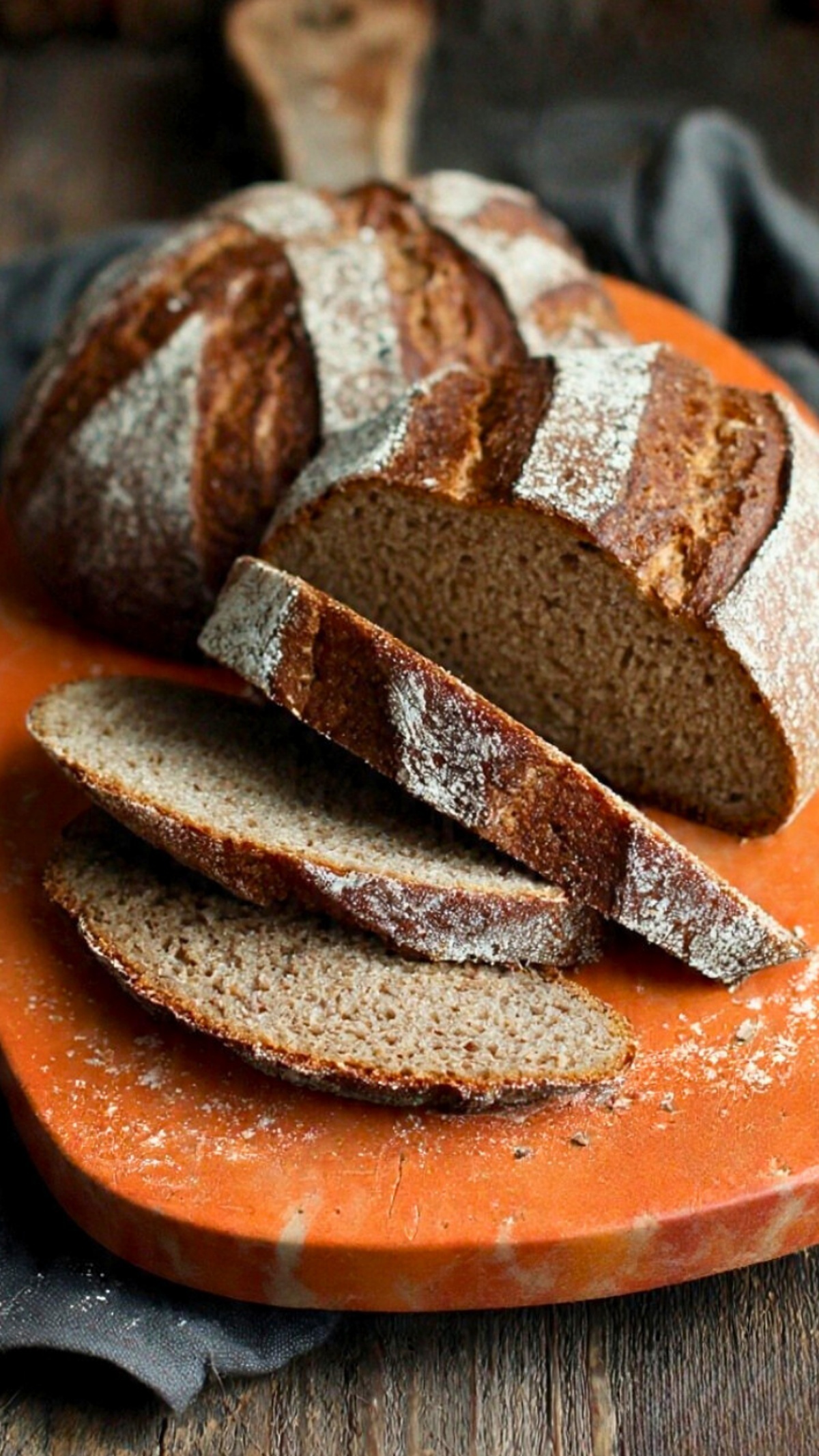
I started tinkering with Rye Bread (Roggenbrot) after getting frustrated with expensive, tiny loaves from the bakery that disappeared in one dinner. I wanted that same dense, aromatic German-style rye on the table without spending a fortune or babysitting dough all day. This version is 100% rye, sourdough-based, and leans on pantry spices so it actually tastes like the real thing, not just a dark sandwich loaf.
I first nailed this recipe while trying to recreate a loaf from a small German café that served thick slices with cheese, pickles, and cold cuts. Their bread had that deep rye flavor plus a gentle hit of caraway and fennel. After a few test rounds, I realized the key was simple: a long rest, a wet but manageable dough, and just enough bread spice to make the kitchen smell like a bakery without overpowering everything else on the plate.
This Roggenbrot has become my go-to when friends come over for a casual spread: a big board with sliced rye, cheese, cured meats, mustard, and whatever pickled things are in the fridge. It’s practical for entertaining because you can make the dough the night before, bake it earlier in the day, and let it cool. By the time people arrive, you’ve got a sturdy, flavorful loaf ready to slice that makes even simple toppings feel special. If you’ve been curious about baking with rye, this is a very forgiving place to start.
Let’s Make Rye Bread (Roggenbrot)
What You’ll Need
- 500 g medium rye flour (German bread type 1150) (about 4¾ cups)
- 320 g active rye sourdough starter, 100% hydration (about 1⅓ cups)
- 15 g salt (about 2½ tsp)
- 1 tsp German bread spice (caraway, fennel, anise, coriander blend)
- 350 ml water, room temperature (about 1½ cups)
Your Step Guide
- Mix the dough. In a large bowl, combine the rye flour, sourdough starter, salt, German bread spice, and water. Stir and knead by hand until everything is thoroughly combined and no dry flour remains. The dough will be sticky and heavy, not elastic like wheat dough — that’s normal.
- Let it rest and ferment. Cover the bowl and let the dough rest at room temperature for at least 1 hour, or up to overnight. You’re aiming for it to look puffed and noticeably expanded, roughly doubled in size. This long rest is crucial for flavor, easier digestion, and structure in a 100% rye loaf.
- Prepare to shape. Lightly flour your work surface with rye or a bit of wheat flour. Scrape the dough out gently with a spatula or dough scraper — don’t punch it down aggressively; you want to keep the gas that’s already formed.
- Shape the loaf. With floured hands, fold the dough from the outer edges toward the center, rotating as you go, until you have a compact, round ball. The surface should feel slightly tighter, but the dough will still be soft. Aim to gather it together rather than knead hard so you don’t create big, uneven holes or weaken its rise.
- Proof in a basket. Generously flour a proving basket (brotform) or a bowl lined with a floured kitchen towel. Place the shaped dough seam-side down in the basket. Cover and let it rise again for about 1 hour, or until it looks fuller and slightly springy when gently pressed.
- Preheat the oven with your baking setup. About 30 minutes before baking, preheat your oven to 428℉ / 220℃. Place a baking stone, Dutch oven, or heavy cast iron skillet inside to heat up. On the lower rack, place a metal or cast-iron pan that can safely take water for steam.
- Get ready to bake with steam. Once the dough is risen, carefully tip it out of the basket onto a piece of parchment paper so the smooth side is now facing up. Use the parchment to transfer the loaf into or onto your preheated baking surface in the oven. Quickly pour about 1 cup of water into the hot pan on the bottom rack to create steam, then close the door.
- Bake and adjust the temperature. Bake at 428℉ / 220℃ for 20 minutes to set the crust. Then reduce the oven temperature to 350℉ / 180℃ and continue baking for another 35–40 minutes. The loaf is done when it sounds hollow if you tap the bottom and the crust is deeply browned.
- Cool completely. Transfer the bread to a wire rack and let it cool fully — at least several hours, ideally until it’s just slightly warm or completely cold. Don’t slice while hot; rye needs time to set inside or it will seem gummy.
- Slice and serve. Once cool, slice with a sharp serrated knife into thin or medium slices. Serve with butter, cheeses, cured meats, or as part of an open-faced sandwich spread for guests.
Choosing the Right Rye
For authentic Rye Bread (Roggenbrot), using medium rye flour (Type 1150 in Germany) gives the best balance of flavor and structure. It has more bran and flavor than light rye, but it’s not as dense as whole rye, which makes the dough slightly easier to handle. If you can’t find medium rye, you can blend 70–80% light rye with 20–30% whole rye to approximate it. Avoid substituting large amounts of wheat flour if you want that classic dense, sliceable German-style crumb. When shopping, look for flour labeled “medium rye,” “bread rye,” or check the protein and ash content on the bag — higher ash usually means more flavor and a darker loaf. Store rye flour in an airtight container; it can go stale faster than wheat, and fresh flour makes a noticeable difference in how well the dough ferments and rises.
Mixing a Sticky Rye Dough
Rye behaves differently from wheat because it relies more on pentosans and starch gel rather than gluten, so the dough will feel sticky, heavy, and a bit paste-like. That’s normal and not a sign something went wrong. When mixing, the goal is to hydrate all the flour and evenly distribute the sourdough starter and salt — not to develop gluten. Use a sturdy spoon or wet your hands to keep the dough from clinging too much. Scrape the sides and bottom of the bowl until no dry patches remain. If the dough seems extremely dry and crumbly, add a tablespoon of water at a time; if it’s soupy, give it a few minutes to rest as rye flour absorbs water slowly. A properly mixed rye dough should hold its shape in the bowl but still sag and feel tacky when touched.
Shaping Without Overworking
With rye, the shaping step is more about gently gathering and smoothing than kneading. Overworking can actually weaken the internal structure and lead to a gummy or uneven crumb. Flour your hands and the surface lightly, then use a scraper to fold the edges of the dough toward the center, turning the dough as you go. You want to create a bit of surface tension on top but avoid aggressively stretching or punching it down like wheat dough. If the dough sticks, add only a thin dusting of flour; too much flour on the outside can create a dry, floury layer after baking. For entertaining, a neat round or oval loaf looks great on a board, so take a minute to smooth the top — your guests will see that first.
Steam for a Better Crust
Steam is what gives this Roggenbrot its shiny, crisp crust and good oven spring, even with 100% rye. When you pour water into a preheated pan at the bottom of the oven, the burst of steam keeps the surface of the dough moist during the first part of baking. This lets the loaf expand before the crust sets, leading to a taller, better-shaped bread. Always use a heavy, oven-safe pan (cast iron is ideal) and pour the water quickly after loading the bread to avoid losing too much heat. Then close the door immediately. If you’re using a Dutch oven, you can skip the extra pan and just bake with the lid on for the first 20 minutes, which traps steam from the dough itself. For entertaining, that well-developed dark crust not only tastes great but also makes the sliced loaf look professional on a serving tray.
Cooling and Slicing Tips
Rye loaves need more patience than wheat breads after baking. Inside, the crumb continues to set as it cools, and cutting too early can make it seem wet or gummy, even if it’s perfectly baked. Always cool the bread on a wire rack so air can circulate around it. For best texture, give it at least 4 hours; many bakers prefer to wait until the next day for the cleanest slices. When you’re ready to serve guests, use a sharp serrated knife and saw gently rather than pressing down. Thin to medium slices work best for open-faced toppings and don’t crumble as easily. If you’re hosting, you can pre-slice part of the loaf and leave the rest whole on a board — it looks generous, keeps the bread from drying out, and lets people cut the thickness they like.
Rye Bread (Roggenbrot)

Equipment
- Large mixing bowl
- proving basket (banneton) lined with flour
- baking stone or Dutch oven
- heatproof vessel for water (cast iron skillet or similar)
- parchment paper
Ingredients
- 500 g medium rye flour (German bread type 1150) about 4¾ cups
- 320 g sourdough starter 100% hydration (about 1⅓ cups)
- 15 g salt about 2½ tsp
- 1 tsp German bread spice blend of caraway, fennel, anise and coriander
- 350 ml water about 1½ cups, adjust as needed
Instructions
- In a large bowl combine the rye flour, sourdough starter, salt, German bread spice and water. Mix and knead the ingredients by hand until evenly incorporated; cover and allow the dough to rest until it has increased noticeably in volume — at least 1 hour, preferably longer or overnight for best flavor and digestibility.
- Turn the dough out onto a well-floured work surface. Fold and coax the dough inward from the edges to form a tight, compact round, working gently to avoid trapping excessive air. This shaping helps produce an even crumb and prevents large holes.
- Place the shaped loaf seam-side up in a proving basket dusted with flour. Cover and let it proof at room temperature for about 1 hour, or until the loaf appears puffed and roughly doubled.
- While the loaf finishes its final rise, preheat the oven to 220°C (428°F) with your baking stone, Dutch oven, or cast-iron surface inside. Put a heatproof dish (I use a small cast iron skillet) on the bottom rack to create steam during baking.
- Carefully invert the proved dough onto a piece of parchment and transfer it to the preheated baking surface. Pour about 1 cup of water into the heatproof vessel on the bottom rack to generate steam, then promptly close the oven.
- Bake for roughly 1 hour total. After the first 20 minutes reduce the temperature to 180°C (350°F) and continue baking for another 35–40 minutes, or until the loaf sounds hollow when tapped on the bottom and has a well-browned crust.
- Remove the bread from the oven and cool completely on a wire rack before slicing to allow the crumb to set and flavors to mature.